Pasadena, California
Where two brothers, a garage, and a stubborn guitar changed rock forever.

Levi Clancy · CC BY-SA 4.0
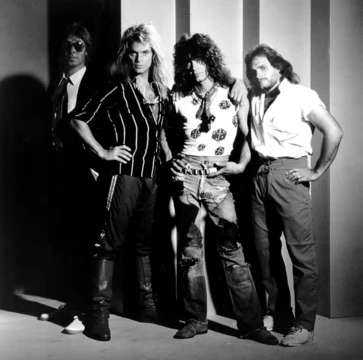
Pasadena, California is the small, sun-drenched city in Los Angeles County where the Van Halen story began. It was here, in the late 1960s and early 1970s, that brothers Alex and Eddie Van Halen grew up, picked up their first instruments, and eventually formed the band that would reshape hard rock. The family home and its garage in Pasadena served as the band's earliest practice space, a cramped, echoey room where the brothers honed their craft. In the broader Van Halen narrative, Pasadena represents the grounded, suburban American origin of a band that would go on to shatter global rock conventions. Every arena tour, every platinum record, every guitar solo that defined an era can be traced back to a kid in a Pasadena garage, frustrated and inventive, trying to make a Fender Stratocaster sound like nothing anyone had heard before.
- Band formed
- 1974
- Founding members
- Eddie Van Halen, Alex Van Halen, Michael Anthony, David Lee Roth
Verified Timeline
Lore & Background
The Van Halen family was of Dutch descent, and the surname itself carried a quiet, old-world weight that contrasted sharply with the electric, high-octane music the brothers would produce. Alex, the older brother (born May 8, 1953), gravitated toward drums, while Eddie (born January 26, 1955) started on piano, then drums, and switched to guitar after Alex proved more proficient on drums. Their parents, who had emigrated from the Netherlands, watched their sons transform the family garage into a makeshift rehearsal room, amplifiers humming through the thin walls of a modest Pasadena home. The garage became a crucible. Eddie's relentless experimentation with tone and technique, all happened in that confined space, far from the spotlight. There were no producers, no studio budgets—just a kid with a guitar, a few borrowed effects, and an almost supernatural ear. Alex's drumming developed in parallel, building the tight, propulsive rhythms that would become the band's engine. The Pasadena years were defined by repetition, frustration, and breakthrough, the kind of slow-burn creative process that rarely makes it into highlight reels but is essential to the final product. When the band eventually moved beyond Pasadena into the wider Los Angeles club scene, the city's suburban calm gave way to the raw energy of empty-pallet shows and dive-bar stages. But the DNA of the music—the interplay between Eddie's guitar and Alex's drums, the sense of two brothers locked in a private conversation—was forged in that Pasadena garage long before any crowd ever saw them play. The city remains, in the band's mythology, the place where the music was still just music, before it became a phenomenon.
In Their Own Story
The garage smelled like solder flux and spilled coffee. Eddie sat cross-legged on the concrete floor, a Stratocaster balanced on his knee, the amp cranked so low the neighbors wouldn't complain but loud enough to make the windows rattle in their frames. Alex stood behind a battered drum kit, sticks tapping a slow, methodical groove, counting in his head. Outside, the Pasadena afternoon stretched long and golden, the eucalyptus trees along the street swaying in a breeze that carried the faint scent of someone's barbecue. A dog barked two houses down. Inside, Eddie's fingers found a strange, percussive pattern on the neck—a hammer-on, a pull-off, a sudden cascade of notes that seemed to defy physics. Alex paused, grinned, and kicked the bass drum. 'Do that again.' That moment, on a forgotten Tuesday in a suburban garage, was the first spark of a sound that would echo through decades. No one wrote it down. No one recorded it. But the air in that room changed, and both brothers knew—without saying a word—that they had stumbled onto something that belonged to them alone.
Reader's Guide
In the Van Halen story, it functions as the origin point—the suburban American backdrop against which the band's most formative years unfolded. The city is not a destination in any narrative sense; it is the starting line. Its role is that of incubator: a place where raw talent is shaped in private, away from industry, press, and expectation. The most significant location within Pasadena for Van Halen lore is the family garage, where Eddie and Alex first developed the interplay that would define their sound. This space represents the band's creative root—the moment before audiences, before contracts, before the name "Van Halen" meant anything beyond a family surname. Pasadena matters because it grounds the band's mythology in something tangible and small. Before the arenas, before the guitar solos that became cultural touchstones, there was a kid in a California garage, making a borrowed guitar do something no one had asked it to do. The city's identity—sun-bright, residential, a little sleepy—contrasts with the explosive energy the brothers would eventually unleash, and that contrast is part of the story's emotional core. It is the quiet before the thunder.
Did You Know?
- The band's name comes directly from the family's Dutch surname, Van Halen, a name the brothers carried from their parents' heritage.
- Eddie Van Halen adapted the two-handed tapping technique after seeing it used by other guitarists; it was not invented in the Pasadena garage.
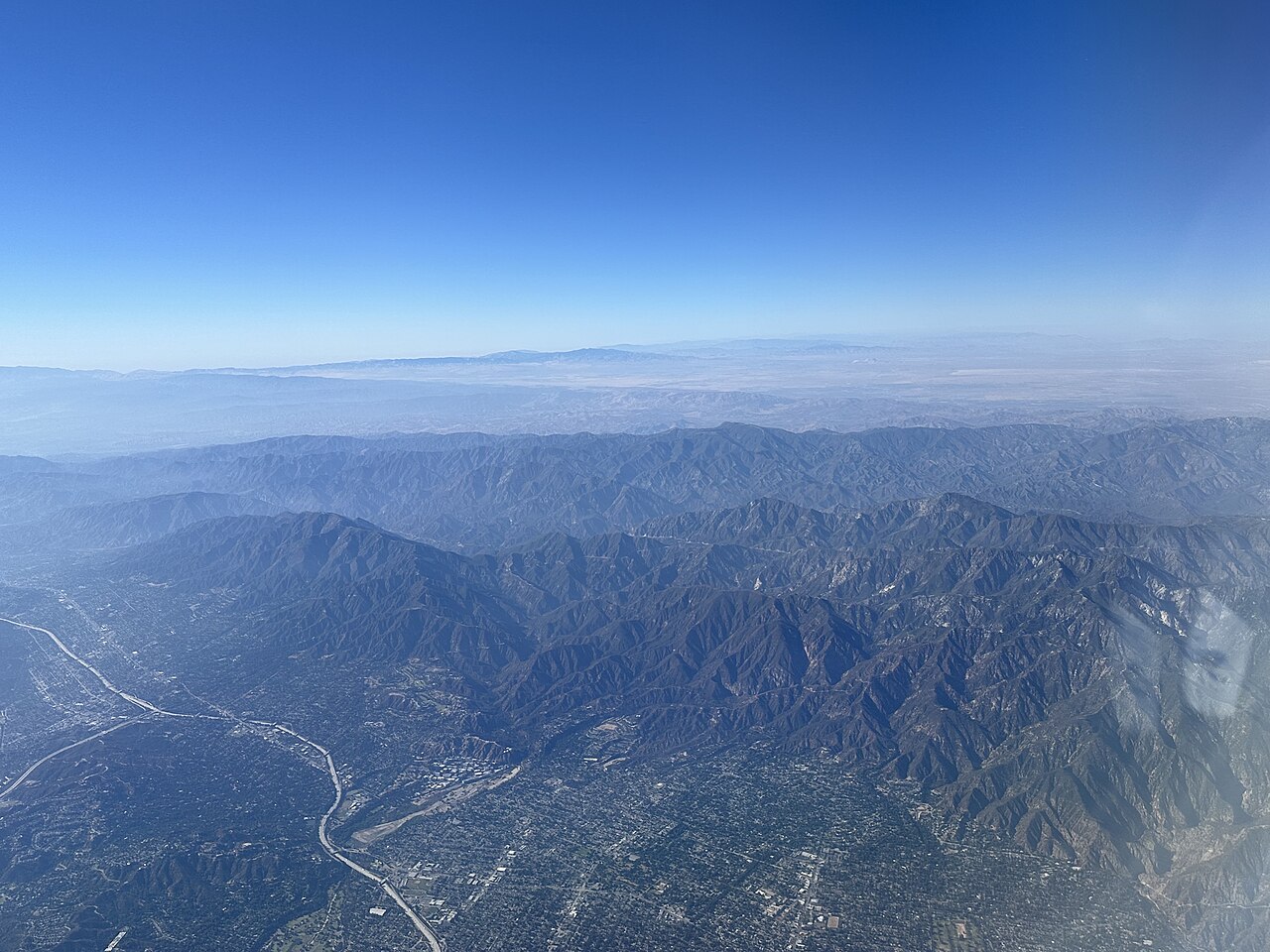
- Pasadena sits in the San Gabriel Valley, a densely populated area of Los Angeles County that has produced numerous musicians and entertainers over the decades.
Dutch Roots, Indonesian Heritage, and a Pasadena Childhood
His mother, Eugenia, was a Euro-Indonesian woman originally from Rangkasbitung on Java in the Dutch East Indies. The family spent six years in Indonesia before settling in Amsterdam and later Nijmegen. Facing mistreatment for their mixed-race relationship during the 1950s, Jan and Eugenia relocated to the United States in 1962, choosing Pasadena, California, near extended family. Because the boys did not speak English natively, they were classified as minority students and endured bullying from white classmates.
From Piano Prodigy to Guitar Revolutionary
Eddie never learned to read sheet music; instead, he absorbed Bach and Mozart recitals by ear and filled the gaps with improvisation. Between 1964 and 1967 he claimed first place in the annual piano competition at Long Beach City College. The brothers' first band, The Broken Combs, performed at lunchtime in Hamilton Elementary School's cafeteria, a moment Eddie later called key to his professional ambitions. A pivotal swap occurred when Eddie heard Alex nail the Surfaris' drum solo from "Wipe Out"; Eddie handed over the drums and picked up the electric guitar. As a teen he practiced for hours, sometimes walking the house with his guitar strapped on, sometimes locked in his room. His signature contribution to rock was popularizing the two-handed tapping technique, enabling rapid arpeggios across the fretboard.
From Mammoth to Mainstream: Forging a Rock Legacy
Eddie and Alex formed the band Mammoth in 1972, and two years later David Lee Roth joined as lead vocalist, prompting the group to rename itself Van Halen. The band became a fixture of the Los Angeles club scene, regularly performing at the Whisky a Go Go. A turning point arrived at a 1976 show at The Starwood, where the band opened for UFO. Kiss bassist Gene Simmons was so impressed he was waiting backstage by the third song. The following year, Warner Records extended a recording deal. Their 1978 self-titled debut climbed to No. 19 on the Billboard pop chart, and by 1984 the band's album of the same name had gone five-times Platinum. "Jump" became their sole No. 1 pop single, a track born partly from Eddie's fascination with keyboards after hearing Kiss's "Creatures of the Night" in the studio.
A Guitarist's Pinnacle and a Life Cut Short
Throughout his career, Eddie Van Halen served as guitarist, keyboardist, backing vocalist, and one of the band's primary songwriters, but it was his guitar work that cemented his place in rock history. His influence on the instrument's vocabulary—particularly the two-handed tapping method—reshaped how successive generations approached the fretboard. Yet behind the virtuosity, Van Halen battled a series of health problems beginning in the 1990s. Now look where we are. If that's not the American dream, what is?" That journey from a Pasadena apartment to the pinnacle of rock guitar encapsulates a life of extraordinary talent and relentless drive.
Gallery
Frequently Asked Questions
Where did Van Halen get its start?
The band was put together in Pasadena, a residential city in Los Angeles County, in 1972. Eddie and Alex Van Halen spent their teenage years there, turning the family home into their first rehearsal spot before the group solidified.
What role did the Van Halen family garage play in the band's history?
That small room at the back of the house is where the brothers first worked out their riffs and where Eddie is credited with discovering his two-handed tapping approach on a secondhand guitar. For fans, it's the physical origin point of the entire Van Halen sound.
Why does Pasadena matter in the broader Van Halen story?
It anchors the band's myth in an ordinary Southern California suburb rather than a glamorous entertainment district. That grounded, working-class neighborhood feel is a big part of why fans romanticize the garage-rock origin of what eventually became a stadium-filling act.
When did the Van Halen brothers begin playing music together in Pasadena?
They were experimenting with instruments in the family home during the late 1960s and into the early 1970s. The lineup that became the actual band was locked in around 1972, still based in that same neighborhood.
Can fans visit the original Van Halen house in Pasadena today?
The family home has long been sold and repurposed, so it is not a public tourist site. Still, the streets where the brothers grew up remain a quiet nod to where one of rock's most influential sounds was first scribbled out in a garage.
More in World & Setting
Related in Van Halen
Links follow this subject's own source article.
Elsewhere in the Van Halen universe
Spotted an error? Know more?
This is a living reference — every entry is fact-audited, and reader corrections feed straight into our audit queue. Suggest an edit · See this site's audit record