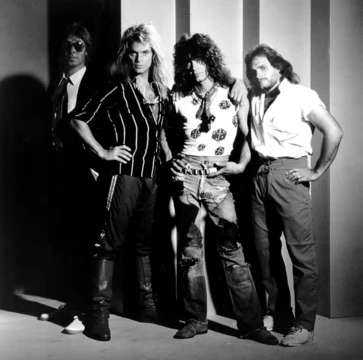
Sammy Hagar
The Red Rocker who fronted Van Halen from 1985 to 1996 and again from 2003 to 2005—and gave the band its only consecutive #1 albums.

via Wikipedia: Sammy Hagar · see source
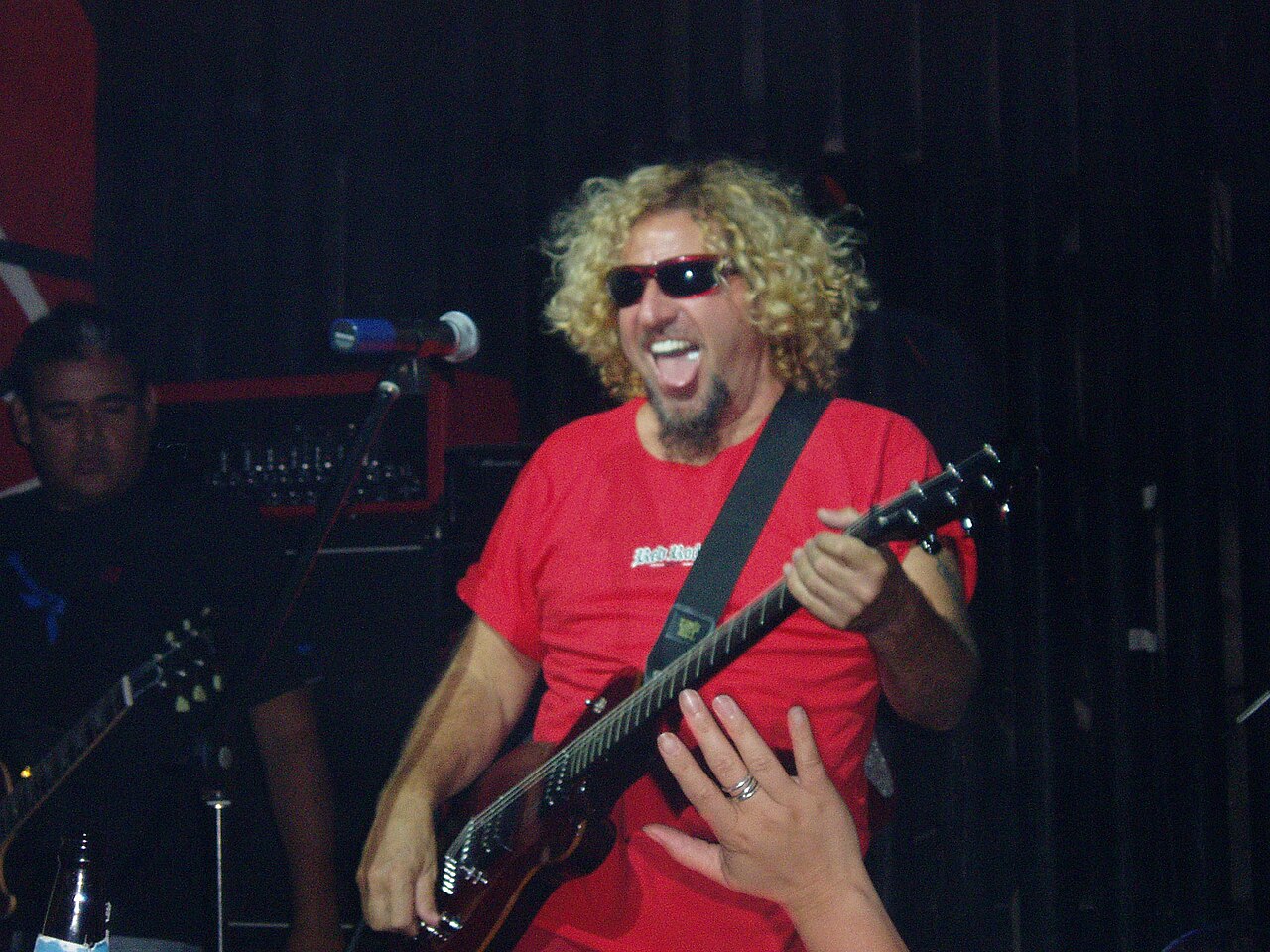
Samuel Roy Hagar (born October 13, 1947), also known as the Red Rocker, is an American singer, songwriter, guitarist, and entrepreneur. He shot to fame in the early 1970s as the frontman of the hard rock band Montrose, then launched a solo career that peaked with the defiant anthem "I Can't Drive 55" in 1984. He reached even greater commercial heights as the second lead vocalist of Van Halen, steering the band through two stints: 1985 to 1996, and 2003 to 2005. In 2007, the original lineup of Van Halen was inducted into the Rock and Roll Hall of Fame; Hagar was not inducted as a member. His musical style is a thunderous blend of hard rock and heavy metal, fueled by a raspy, high-energy voice and a knack for party-starting hooks.
- Nickname
- The Red Rocker
- Affiliation
- Van Halen; Montrose; solo career
- Status
- Former member (departed 1996)
Verified Timeline
Lore & Background
Hagar's path to Van Halen began when Eddie Van Halen approached him at a festival in the mid-1970s and told him Montrose was his favorite band, calling himself a "Montrose freak." Hagar has said Eddie took some of that big open chord style from Montrose. After David Lee Roth parted ways with Van Halen in 1985, the remaining members auditioned Hagar in April at his car mechanic's suggestion, given Eddie's appreciation of Montrose. With Hagar at the front, Van Halen produced four multi-platinum, number 1 Billboard charting albums: 5150, OU812, For Unlawful Carnal Knowledge, and Balance, as well as many chart hits, including nine number 1 Mainstream Rock hits. During Hagar's stint, the band was often informally referred to by fans as "Van Hagar" to distinguish from the David Lee Roth era. Internal disputes led to Hagar's departure in June 1996, when he disagreed with recording two new tracks for a greatest hits album after the band had agreed to take time off following their 1995 world tour.
In Their Own Story
The tension had been building since the 1995 world tour ended. Hagar wanted to dive into a new studio album, hungry to keep the creative momentum alive. But the band's new manager, Ray Danniels, pushed instead for two new tracks on a greatest hits compilation—a move Hagar saw as a cash grab that shortchanged the fans. The disagreement festered, and in June 1996, Hagar walked away from the band he had helped resurrect. Before that fracture, the chemistry had been undeniable: Eddie Van Halen, a self-proclaimed 'Montrose freak,' had lobbied for Hagar after a chance encounter at a festival, and together they forged four consecutive number 1 albums—a feat the Roth era never matched. Fans dubbed them 'Van Hagar' to mark the shift in sound, and the hits kept coming: nine number 1 Mainstream Rock smashes, from 'Why Can't This Be Love' to 'Right Now.' But the partnership that began with a car mechanic's offhand suggestion and a shared love for big open chords ultimately crumbled over a clash of artistic vision and business pressure.
Reader's Guide
Sammy Hagar's Van Halen tenure spans two periods: 1985 through 1996, and 2003 to 2005. He joined after Eddie Van Halen, a self-described "Montrose freak," pushed for his hiring. The band produced four multi-platinum number 1 albums with Hagar: 5150, OU812, For Unlawful Carnal Knowledge, and Balance. They scored nine number 1 Mainstream Rock hits. Fans often called this era "Van Hagar" to distinguish it from the David Lee Roth years. Hagar left in June 1996 over a disagreement about recording new tracks for a greatest hits album versus a full studio album. He was inducted into the Rock and Roll Hall of Fame in 2007 as a member of Van Halen.
Did You Know?
- Hagar was named after his maternal grandfather, Sam Roy Baio, a Sicilian immigrant.
- Despite persistent rumors of Lebanese descent, Hagar has stated he is of Irish and Italian heritage.
- Hagar's father Bobby was a boxer who once held a bizarre record: knocked down 20 times in a single fight.
- Hagar taught himself to play guitar on a $40 instrument from a Sears catalog, learning by ear from records.
- Before Van Halen, Hagar turned down an offer to join the band that became KISS, because he thought their makeup was 'silly.'
Chart Dominance and Commercial Milestones
OU812, released on May 24, 1988, became Van Halen's second consecutive number-one album on the Billboard 200, extending a remarkable streak of four straight top studio albums. The record was propelled by four Billboard Hot 100 top-40 singles: "Black and Blue" peaked at 34, "Finish What Ya Started" reached 13, "When It's Love" climbed to 5, and "Feels So Good" landed at 35. Together these hits drove the album past four million copies sold. As the second studio effort featuring Sammy Hagar on vocals following 5150, OU812 cemented the band's commercial viability with their new frontman. The recording window was tight, running from September 1987 to April 1988, just one month before the release date.
A Self-Directed Creative Process
The making of OU812 was notably hands-on. After the 5150 tour wrapped, Eddie Van Halen had riffs brewing and Hagar carried notebooks full of lyrics they had been mulling over, so the pair dove straight into another record. There was no outside producer; Hagar explained the band essentially produced themselves, not in a controlling top-down sense, but simply without an external creative authority steering the ship. The album's closer, "Finish What Ya Started," was composed late one night by Eddie and Hagar together. Most strikingly, "Mine All Mine" required seven complete rewrites of its metaphysical lyrics, with Hagar describing a period of intense self-punishment and frustration to get the words right.
Critical Debate and Enduring Reputation
Upon release, OU812 drew a spectrum of critical responses. He called the album "a veritable feast of great white rock & roll wow" at its peak.
Personal Dedication and Cultural Footprints
Beneath the commercial sheen, OU812 carries deeply personal weight. The album is dedicated to Jan Van Halen, the father of Eddie and Alex, who passed away on December 9, 1986, at age 66. The title itself has a whimsical origin: Hagar spotted "OU812" on the side of a delivery truck while driving the freeway and found it amusing, replacing the working title "Bone," which Alex despised. The phrase had earlier appeared on a car's license plate in Cheech and Chong's Next Movie (1980) and was scribbled on a payphone column in the sitcom Taxi.
Gallery


Frequently Asked Questions
Who is Sammy Hagar in the Van Halen story?
Sammy Hagar, universally called "The Red Rocker," was the band's lead singer from 1992 to 1999. He injected a raw, blues-driven vocal energy into the group and helped steer them toward a harder arena-rock identity.
Which Van Halen studio albums did Sammy Hagar sing on?
He contributed his voice to four consecutive studio records, kicking off with For Unborn Children in 1992. Each of those releases leaned into a more anthemic, guitar-forward rock sound than the band's earlier, more theatrical output.
What was Sammy Hagar doing before he joined Van Halen?
Hagar had already fronted the band Montrose and built a long, prolific solo career by the time he was recruited. His reputation as a high-octane blues-rock vocalist made him a natural choice when the group wanted a grittier, more live-oriented frontman.
Why did Sammy Hagar leave Van Halen in 1999?
He stepped away from the band in 1999 to refocus on his solo recordings and personal life. His departure closed out what many fans consider the most commercially dominant stretch in Van Halen's history.
How did Sammy Hagar's live shows feel compared to the David Lee Roth era?
Hagar's concerts traded the elaborate stage theatrics and comedy bits of the Roth years for a more straightforward, riff-driven power-rock spectacle. Fans of that period remember his raspy, belted delivery as the centerpiece of every set.
More in Characters
Related in Van Halen
Links follow this subject's own source article.
Elsewhere in the Van Halen universe
Spotted an error? Know more?
This is a living reference — every entry is fact-audited, and reader corrections feed straight into our audit queue. Suggest an edit · See this site's audit record