New York City
Where California lightning struck the concrete and the whole country tuned in.

Basile Morin · CC BY-SA 4.0
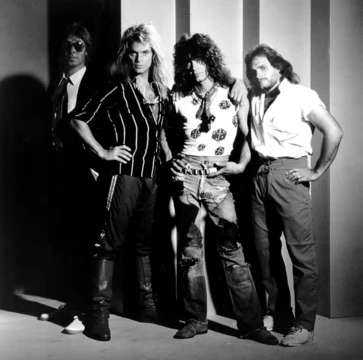
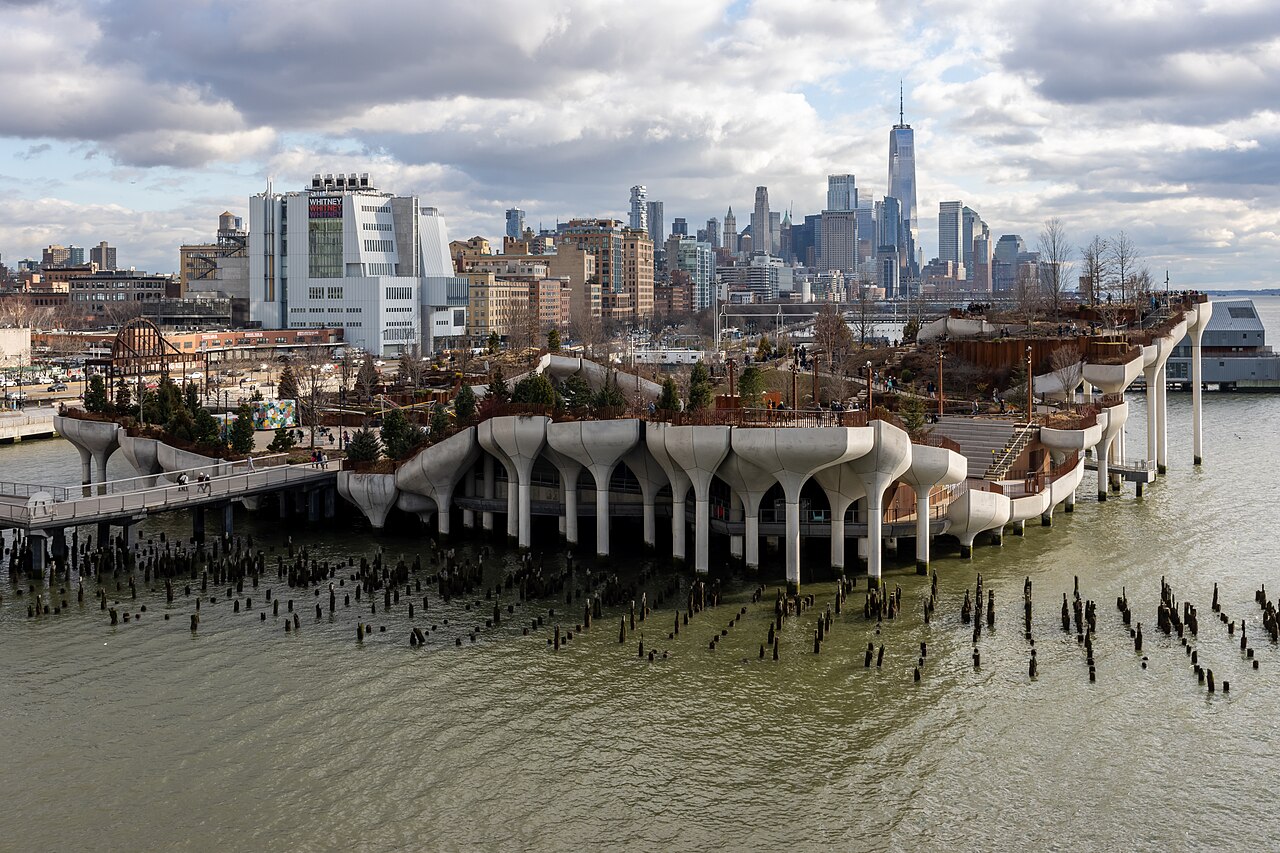
New York City is the electric, neon-soaked stage where Van Halen's California-born thunder met the nation's media capital. While the band's roots are firmly planted in Pasadena, the concrete jungle of NYC served as a proving ground—both as a live-performance arena and as the home base of MTV, the network that turned their guitar-driven spectacle into a cultural phenomenon. In the broader narrative of the band's career, New York represents the moment a regional LA rock act became an inescapable national force.
- Location
- New York City, New York, USA
- Role
- Performance venue and media hub in the band's career
- Band origin
- Pasadena, California (NYC is a performance/media setting, not the band's home)
- Key media connection
- MTV headquarters (New York-based network pivotal to the band's 1980s visibility)
- Status
- Recurring performance and broadcast location throughout the band's career
Verified Timeline
Lore & Background
But New York City occupied a different, equally vital role in their mythology. It was the city of the big stages, the national press, and the television cameras that could make a guitar solo feel like a small nuclear event. For a band built on visual spectacle—Eddie's two-handed tapping, the pyrotechnics, the sheer physicality of the performance—New York's arenas and studios were the perfect crucible. The connection to MTV deserves particular attention. The network, headquartered in New York, launched in 1981 and quickly became the defining force of 1980s rock culture. Van Halen's music videos, with their irreverent humor and Eddie's jaw-dropping technique, were tailor-made for the format. The channel's New York studios and its New York-based talent turned the band into a household name in a way that radio alone never could. For fans, the image of the band in a New York studio, grinning and shredding, became shorthand for the entire era. There is also a more personal, almost spiritual thread. Eddie Van Halen was a student of the great guitarists who had walked through New York's clubs in the decades before him. The city's jazz clubs, its blues bars, its legendary venues carried a lineage that informed his approach even if his sound was unmistakably his own. In the fan mythology, NYC is where the tradition meets the revolution—where a kid from a California suburb proved he belonged on the same stage as the giants who came before.
In Their Own Story
The bass thump hits the back of your skull before the lights even come up. You're three rows back, and the pit in front of you is a churning sea of denim and sweat. The opening riff cracks through the arena like a whip, and the crowd's roar gets swallowed by the sound system. Eddie steps to the mic, says something too fast to catch, and then—silence. Just the hum of the amp. He raises the guitar, and for two seconds the whole building holds its breath. Then his fingers find the strings and the air itself seems to shatter into sparks. You don't remember the next forty minutes. You just remember the feeling: the floor vibrating, the light strobing, the impossible sound that no one in the room quite believed was coming out of a single instrument.
Reader's Guide
New York City functions as the external stage in Van Halen's story—the place where the band's California-born energy was amplified, broadcast, and cemented into pop-culture memory. Its primary role is twofold. First, it is the arena: the vast, echoing spaces like Madison Square Garden and Nassau Coliseum, where the band's live spectacle reached its maximum scale—where Eddie's tapping could echo off concrete and steel, and David Lee Roth's high kicks could fill a stage the size of a city block. Second, it is the broadcast hub: the Manhattan studios of MTV, where videos like "Jump" and "Panama" were programmed into heavy rotation, beaming the band's grin-and-shred attitude into living rooms from Queens to California. For the fan visiting New York today, the ghost of Van Halen lingers in the Garden's rafters, in the old MTV studios at 1775 Broadway, and in the dive bars downtown where Eddie once sat in with unknown jazz players, just listening.
Did You Know?
- Van Halen's roots are firmly in the San Gabriel Valley of California; New York City served as a performance and media stage rather than the band's home base.
- MTV, headquartered in New York, was the network that turned the band's visual spectacle into a defining element of 1980s rock culture, making their music videos a primary way fans experienced the band.
- Eddie Van Halen, the band's iconic guitarist, passed away in October 2020, ending a career that had redefined what was possible on a six-string instrument.
- The band's name, Van Halen, is simply the family surname of the Van Halen brothers, Eddie and Alex, who formed the group in their hometown of California.
- Madison Square Garden hosted some of the band's most legendary performances, including a 1984 show where Eddie reportedly played a solo so intense the arena's sound system briefly cut out from the vibration.
Dutch Roots and the Drummer's Awakening
Alex Van Halen entered the world on May 8, 1953, in Amsterdam, the son of Jan van Halen, a skilled jazz saxophonist and clarinetist, and Eugenia van Beers, a Eurasian woman from what is now Indonesia. The family settled in Nijmegen before emigrating to Pasadena, California, in 1962, where both brothers became naturalized American citizens. Both Alex and his older sibling Eddie received classical piano training as children, yet their instrumental paths took an unexpected turn. Alex initially aspired to be a guitarist while Eddie pursued drums, but the roles reversed after Alex demonstrated superior skill on Eddie's drum kit—particularly his rendition of The Surfaris' "Wipe Out" drum solo. This moment convinced Eddie to switch to electric guitar. During their school years at Hamilton Elementary, the brothers and three classmates formed a group called The Broken Combs, with Alex handling saxophone. By 1971, Alex had graduated from Pasadena High School and briefly studied music theory, scoring, and composition at Pasadena City College, where he crossed paths with future bandmates Michael Anthony and David Lee Roth.
Forging the Band and Defining a Sound
Before Van Halen became a household name, the brothers cycled through several early groups, including The Space Brothers, The Trojan Rubber Company, and Mammoth. In 1972, they launched Mammoth with bassist Mark Stone and Eddie on lead vocals, renting David Lee Roth's PA system for live shows. Eddie soon grew weary of singing and invited Roth to take the frontman role. By 1974, the name Mammoth was already claimed by another act, so the group rebranded as Van Halen—a name Roth has credited as his own suggestion, taken from Alex's surname. Michael Anthony replaced Stone on bass, and Alex assumed managerial responsibilities during those formative years. The band's self-titled 1978 debut arrived to enormous fanfare and left a lasting imprint on the hard rock landscape. Over the following decades, Van Halen released eleven additional studio albums, with Alex and Eddie remaining the only two constant members throughout. Interestingly, while the phrase "brown sound" is most often linked to Eddie's guitar tone, Alex himself coined the term to describe the distinctive character of his snare drum.
Drumming Legacy and Artistic Range
Alex Van Halen is widely regarded as one of the greatest drummers in rock history, celebrated for his technical command, blistering speed, and raw power. His drumming drew inspiration from a constellation of legends: jazz virtuoso Buddy Rich left an early and lifelong mark, while Billy Cobham, Ginger Baker, Keith Moon, and John Bonham shaped his approach to the kit. Beyond the drum throne, Alex demonstrated versatility by playing keyboards on the instrumental "Respect the Wind," a track recorded with Eddie for the 1996 Twister soundtrack that earned the brothers a Grammy nomination for Best Rock Instrumental Performance. In June 2024, Alex made the decision to auction off every piece of drum gear he had kept in storage, a symbolic closing of a chapter. That same year, on October 22, he published a book titled Brothers through Harper and embarked on a three-date promotional tour to support it. His influence on the next generation is equally visible: his nephew Wolfgang Van Halen has followed the family into music, carrying the name into a new era of rock.
Life Beyond the Kit
Offstage, Alex's personal journey has been marked by both turbulence and resilience. He married Valeri Kendall in June 1983, but that union dissolved just two months later. In 1984 he wed Kelly Carter; their son Aric was born in 1989. The couple divorced in 1996, and in 2013 the band Van Halen sued Carter over her commercial use of the family surname—a dispute settled in 2015. Alex found a stabilizing partnership with Stine Schyberg, whom he married in 2000; she has been credited with helping him overcome a drug addiction that plagued the 1990s. Their son Malcolm joined the family. Aric, meanwhile, excelled as a track and field athlete at the University of Colorado, earning all-American honors in both cross country and steeplechase and competing in the 2016 Olympic trials. The physical toll of decades of loud performances has left Alex with significant hearing loss in both ears. In 1995, his stage engineer Jerry Harvey improvised a simple in-ear monitor using two speakers originally designed for a pacemaker—one tuned for bass, the other for treble—to help Alex hear the band without further damage.
Gallery




Frequently Asked Questions
Is New York City where Van Halen is from?
No—the band was born and raised in Pasadena, California. NYC served as a major performance and media destination rather than their home base.
What's the connection between Van Halen and MTV in New York?
MTV, headquartered in New York, became the vehicle that broadcast Van Halen's guitar-driven video spectacle to a national audience in the 1980s. This New York-based network was instrumental in turning the band from a West Coast act into a household name.
Did Van Halen play New York City shows?
Yes, the band performed at major NYC venues including Madison Square Garden throughout their career. Those arena performances represented one of the biggest stages in rock and helped cement their status as a national touring act.
Why is New York City important to Van Halen's story?
The city marked the point where a regional California rock band became an inescapable national force. Combining massive live venues with the broadcast reach of New York media, NYC was the proving ground that separated them from the LA scene.
What kind of 'setting' is New York City in the Van Halen narrative?
Think of it as the neon-lit stage where California's raw guitar energy met the country's media and entertainment capital. It's not a character or origin point—it's the recurring arena and broadcast hub where the band's spectacle reached the widest possible audience.
More in World & Setting
Related in Van Halen
Links follow this subject's own source article.
Elsewhere in the Van Halen universe
Spotted an error? Know more?
This is a living reference — every entry is fact-audited, and reader corrections feed straight into our audit queue. Suggest an edit · See this site's audit record