The California Music Scene
Where garage noise became stadium thunder and a single guitar string rewired rock forever.

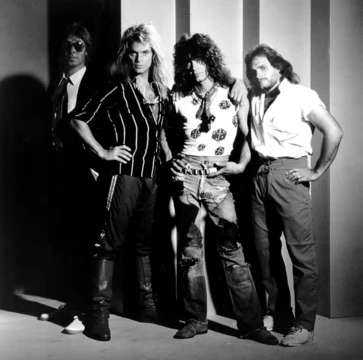
The California Music Scene refers to the vibrant, competitive, and endlessly inventive ecosystem of rock and hard-rock bands that flourished in Southern California from the early 1970s through the 1980s and beyond. It is the cultural soil from which Van Halen sprouted in Pasadena in 1972, the network of clubs, record labels, radio stations, and rival bands that shaped their sound, their image, and their relentless drive to push guitar music into new territory. As a 'faction' in the broader narrative of rock history, the California scene functioned as both a crucible and a stage: a place where young players like Eddie and Alex Van Halen could test wild ideas in smoky basements, where a band could go from playing to teenagers at a Pasadena club to headlining stadiums within a few years, and where the constant pressure to outdo the next band kept the whole ecosystem evolving. Van Halen did not merely participate in this scene—they arguably redefined its center of gravity, turning technical guitar virtuosity into a mainstream spectacle and inspiring a generation of players who followed.
- Location
- Southern California (Pasadena / Los Angeles corridor)
- Formative era
- Early-to-mid 1970s through the 1980s
- Key Van Halen figures
- Eddie Van Halen, Alex Van Halen, David Lee Roth, Sammy Hagar
- Associated venues
- Whisky a Go Go, The Roxy, Pasadena clubs
- Dominant genres
- Hard rock, heavy metal, arena rock, funk-rock fusion
- Cultural role
- Incubator and proving ground for the LA rock movement
- Status
- Historical (peak activity 1970s–1990s); legacy continues
Lore & Background
To understand Van Halen, you have to understand the particular electricity of Southern California in the early seventies. The state had already produced the psychedelic flower-power movement of the mid-sixties, and by the time two Dutch-American teenagers were wiring a homemade guitar in their father's garage in Pasadena, the local scene was hungry for something louder, faster, and more technically daring. The clubs in the Hollywood and Pasadena corridors—places where a band could play to forty people one night and two hundred the next—created a feedback loop of competition. You had to be better, weirder, more viscerally exciting than the band that played the night before, or the audience simply walked to the next venue. Eddie Van Halen's entry into that scene was almost accidental. He and his brother Alex had been playing together since their early teens, and Eddie's obsessive experimentation with tapping, two-handed fretting, and a custom-built guitar that looked more like a science project than a musical instrument gave the band a sonic signature no one in the local circuit had heard. When they added David Lee Roth—a theatrical, high-energy vocalist who could command a room with pure charisma—they had a package that the California scene's gatekeepers (club bookers, radio DJs, indie label scouts) found impossible to ignore. The debut album, released in 1978, was recorded with the raw, aggressive energy of a live set, and it detonated across the country. The California scene was never a monolith. It ranged from the glam-tinged arena rock of the early eighties to the harder, sleazier edge that would later be labeled 'LA metal.' Van Halen sat at the intersection of all of it: technically metal, rhythmically funk-influenced, visually theatrical, and commercially massive. Their success validated the entire ecosystem—more clubs opened, more labels took risks, more kids picked up guitars specifically to try to replicate that 'Eddie sound.' The scene, in turn, kept feeding new ideas back into the band, creating a creative dialogue that defined a generation of rock music.
In Their Own Story
The bass thumped through the floorboards of the Pasadena club, a low, bone-deep pulse that you felt in your molars before you heard it with your ears. The audience was maybe sixty people crammed into a space built for forty, all of them young, all of them watching the stage with the particular intensity of kids who had never seen anyone play guitar the way the dark-haired kid in the front row was playing it right now. His hands moved in a blur, fingers striking strings from both sides of the neck simultaneously, producing a staccato run that sounded like a machine gun made of bells. The crowd didn't cheer. They gasped. Then someone shouted, and the shout became a roar, and the roar became the kind of collective howl that shakes the cheap fluorescent lights hanging from the ceiling. In the back of the room, a lanky bassist in a leather jacket leaned against the wall, grinning, tapping his bass strings in a lazy funk groove that anchored the chaos. On the other side, a vocalist with a wild mane of hair and a microphone stand he used almost as a weapon was pacing the stage, feeding off the energy, calling out to the kids in the front row, making them feel like they were the only audience in the world. The three of them locked eyes over the tops of their amps, and for a second the noise fell away and there was just the three of them, breathing the same hot, amp-scented air, knowing that whatever they did next would make the room either forget them or remember them forever. They chose to remember. The next song hit like a freight train, and the fluorescent lights actually flickered. Somewhere in the back, a kid in a denim jacket dropped his beer. Nobody noticed. The California night was young, loud, and entirely theirs.
Reader's Guide
The California Music Scene is less a single organization than a living, breathing ecosystem of musicians, venues, producers, and fans concentrated in the Southern California corridor. Its 'goal,' if it can be called that, is the relentless pursuit of sonic innovation and audience impact—each band pushing the last one to be louder, faster, more creative. Members range from the household names (Van Halen, and the many bands that followed in their wake) to the hundreds of local acts who played the same circuit, shared the same road-worn vans, and competed for the same Saturday-night slots at the Whisky or the Roxy. The scene's key 'resources' are its venues, its independent radio, and its culture of mutual respect mixed with fierce rivalry. In the broader conflict of rock music's evolution, the California scene served as the primary battleground where the old, blues- and folk-rooted rock of the sixties was challenged by a new, technically aggressive, visually theatrical style. Van Halen's role in this conflict was that of a disruptive force: they didn't just play within the scene's rules—they broke them, introduced new guitar techniques, new production approaches, and a level of stage spectacle that reset expectations for every band that followed. The scene's 'victory condition' was simply to keep evolving, and Van Halen's contribution was to make the bar impossibly high, forcing everyone else to leap or be left behind.
Did You Know?
- Eddie Van Halen built his first guitar from a kit and a piece of plywood, and the distinctive 'Frankenstrat' look that became his signature was born out of necessity and experimentation in the Van Halen family garage — a
- The tapping technique that became Eddie's trademark was largely self-taught through hours of obsessive practice, and it was so unusual in the mid-1970s that many listeners initially thought it was a studio trick or a dif
- Van Halen's early live shows in Southern California were so physically intense that the band's equipment would sometimes literally shake loose from the stage, a detail that became part of the band's legend among fans who
- The California rock scene of the late 1970s and 1980s was so densely packed with talented, ambitious bands that it effectively created its own subculture — specific fashion (spandex, bandanas, ripped jeans), slang ("kick
More in Factions & Groups
Elsewhere in the Van Halen universe
Spotted an error? Know more?
This is a living reference — every entry is fact-audited, and reader corrections feed straight into our audit queue. Suggest an edit · See this site's audit record